

Carpal Tunnel Therapy: Beyond Braces to Root-Cause Relief

That persistent tingling, numbness, or aching pain in your hand and wrist can be more than just a minor annoyance—it can disrupt your work, hobbies, and even your sleep. If these symptoms sound familiar, you may be dealing with Carpal Tunnel Syndrome (CTS). While the condition is common, especially for manual workers and those who spend hours at a keyboard, effective relief is within reach. The key lies in moving beyond temporary fixes and embracing a comprehensive approach. This guide will explore the gold standard in expert carpal tunnel syndrome therapy, a doctor-led, evidence-based path to reclaim comfort and function in your hands, without resorting to invasive procedures.
Understanding the Squeeze: What is Carpal Tunnel Syndrome?
Before diving into treatment, it's crucial to understand what's happening inside your wrist. The carpal tunnel is a narrow passageway on the palm side of your wrist, formed by small wrist bones (carpals) and a strong band of connective tissue (the transverse carpal ligament). This tunnel protects the median nerve, which provides sensation to your thumb, index, middle, and half of your ring finger, and controls some muscles at the base of the thumb.
Carpal Tunnel Syndrome occurs when this tunnel narrows or when the tissues surrounding the flexor tendons within the tunnel swell, putting pressure on the median nerve. This compression is what leads to the classic symptoms:
- Numbness and Tingling: Often described as "pins and needles," particularly in the thumb and first three fingers.
- Pain: Aching or burning pain in the hand, wrist, or even forearm.
- Weakness: Difficulty with gripping objects, clumsiness, or a tendency to drop things.
- Nighttime Symptoms: Many people find their symptoms worsen at night, often waking them from sleep.
While often associated with repetitive office work, CTS can be caused or exacerbated by a variety of factors, including wrist anatomy, underlying health conditions like diabetes or rheumatoid arthritis, hormonal changes during pregnancy, and forceful or prolonged wrist flexion in manual labor.
The Physio Cure Difference: Root-Cause Diagnosis for Wrist Pain Physiotherapy
At Physio Cure Dubai, we fundamentally reject a one-size-fits-all approach to healthcare. Our core philosophy is built on **Doctor-Led Treatments** and **Root-Cause Diagnosis**. When you come to us for wrist pain physiotherapy, your journey begins not with a generic set of exercises, but with a comprehensive assessment by a licensed Doctor of Physical Therapy. We don't just treat the symptom (the compressed nerve); we investigate the underlying cause.
Is your wrist pain a result of poor workstation ergonomics? Is it related to inflammation from a systemic issue? Or could it be referred from a problem in your neck or shoulder, a common but often overlooked contributor? Our expert clinicians, like Dr. Shaimaa Hamdalla, who specializes in postural dysfunctions and chronic pain, are trained to look at the bigger picture. This holistic, evidence-based approach ensures that your personalized treatment plan is designed for lasting relief, not just a temporary pause in symptoms. We believe in empowering our patients through education, giving you the tools and understanding to manage your condition and prevent its recurrence.
A Modern Toolkit for Non-Surgical Carpal Tunnel Treatment
Effective carpal tunnel syndrome therapy relies on a multi-faceted strategy that combines time-tested techniques with modern technology. Our goal is to reduce pressure on the median nerve, decrease inflammation, and restore normal function. Here are some of the key components of a successful non-surgical carpal tunnel treatment plan at our clinic:
- Manual (Hands-On) Therapy: This is the cornerstone of our treatment. Our doctors use skilled, precise techniques to mobilize the small bones of the wrist, release tight ligaments, and reduce restrictions in the soft tissues surrounding the carpal tunnel. This helps to physically create more space for the median nerve.
- Custom Splinting and Bracing: A neutral wrist splint, particularly worn at night, prevents the wrist from flexing or extending, positions that increase pressure within the carpal tunnel. We guide patients on the proper use and type of splint for maximum effectiveness.
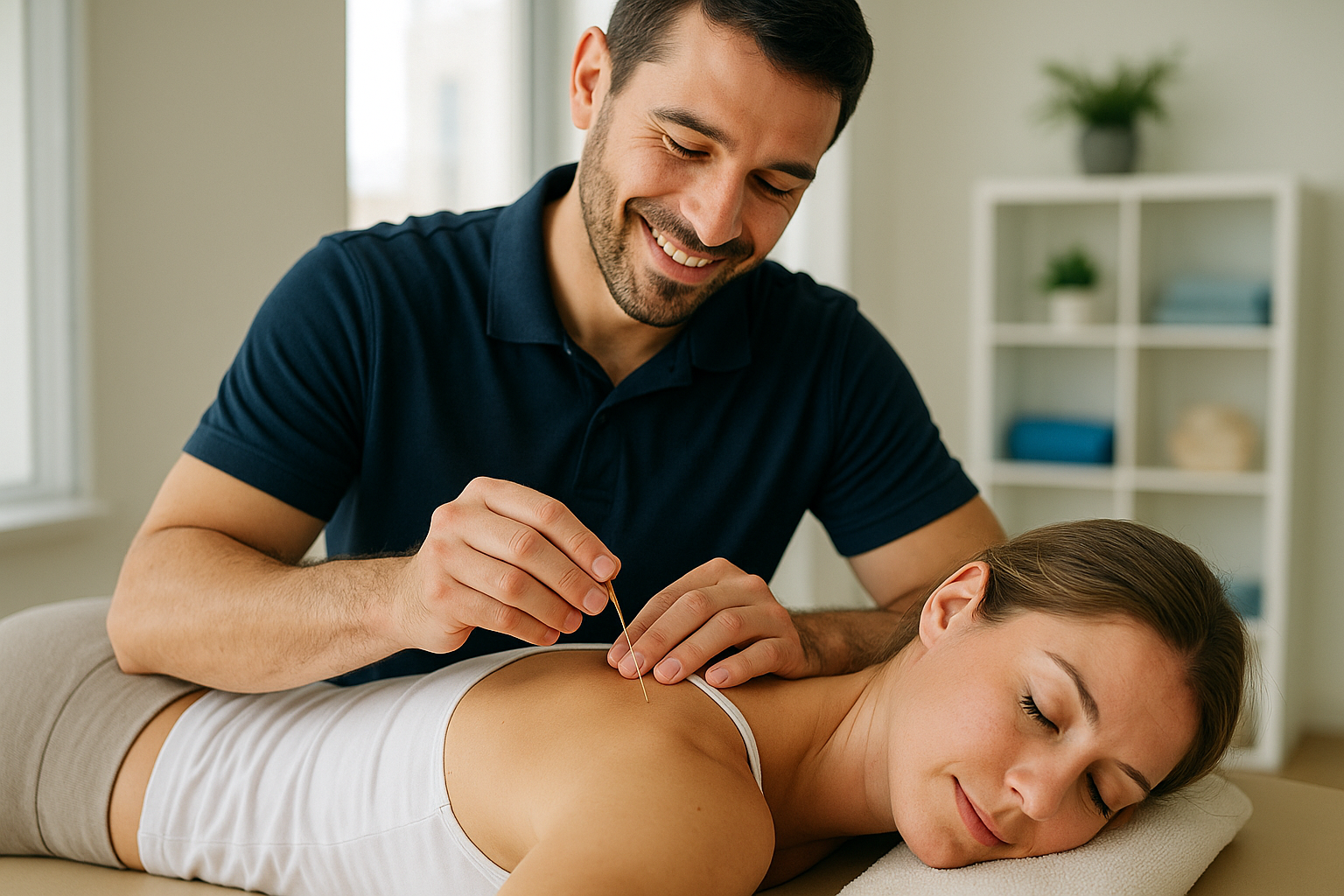
- Dry Needling: This advanced modality involves inserting thin filiform needles into muscular trigger points in the forearm. It can be incredibly effective at releasing chronic muscle tightness that contributes to nerve compression, improving blood flow, and reducing pain.
- Cupping Therapy: By creating suction, cupping helps to lift the connective tissue, promoting circulation and releasing adhesions that may be restricting the median nerve and surrounding structures.
- Acupuncture: As part of our holistic approach, acupuncture can be integrated to help manage pain and reduce inflammation, working on the body's natural healing and pain-relief pathways.
A key goal of therapy is to decompress the median nerve without surgery. A combination of manual therapy and targeted exercises often provides significant and lasting relief by addressing the mechanical sources of the compression.
Empowering Movement: Essential Carpal Tunnel Syndrome Therapy Exercises
While passive treatments are important, active participation is vital for recovery. Targeted exercises help to improve the mobility of the nerve, strengthen supporting muscles, and reduce strain. Our physiotherapists will create a fully customized program for you, but here are some foundational exercises often included in carpal tunnel syndrome therapy.
Nerve and Tendon Gliding Exercises
These exercises are designed to help the median nerve and flexor tendons move more freely within the carpal tunnel, preventing adhesions and reducing pressure. One of the most effective techniques is known as **median nerve gliding**.
- Starting Position: Sit or stand. Start with your wrist in a neutral position, fingers and thumb bent into a fist.
- Step 1 (Finger Extension): Straighten your fingers and thumb, keeping them close together.
- Step 2 (Wrist Extension): Keeping your fingers straight, bend your wrist back (extension).
- Step 3 (Thumb Abduction): Keeping your wrist and fingers extended, gently stretch your thumb away from your palm.
- Step 4 (Supination & Stretch): Gently turn your forearm so your palm faces up. With your other hand, apply a gentle stretch to the thumb.
Perform this sequence slowly and smoothly 5-10 times, several times a day. You should feel a gentle stretch, not sharp pain.
Gentle Wrist Stretches
Wrist Extensor Stretch: Extend one arm in front of you with your palm facing down. Gently bend your wrist down, so your fingers point to the floor. Use your other hand to apply light pressure to the back of the stretching hand to deepen the stretch. Hold for 20-30 seconds.
Wrist Flexor Stretch: Extend the same arm in front of you, but this time with your palm facing up. Gently bend your wrist down, so your fingers point to the floor. Use your other hand to apply light pressure to the palm, pulling it towards you. Hold for 20-30 seconds.
Consistency is more important than intensity. Performing these gentle exercises and stretches for a few minutes several times a day is far more beneficial than one long, aggressive session.
Beyond the Clinic: Ergonomics and Lifestyle for Lasting Results
True and lasting relief from Carpal Tunnel Syndrome involves integrating healthy habits into your daily life. Patient education is a core part of our six-stage recovery path at Physio Cure. We work with you to identify and modify the activities that aggravate your symptoms. For our patients who are manual workers or post-op, understanding these modifications is key to preventing re-injury.
Key lifestyle adjustments include:
- Workstation Ergonomics: Adjust your chair, desk, and keyboard height to ensure your wrists remain in a straight, neutral position. Your elbows should be at a 90-degree angle. Consider an ergonomic keyboard or mouse.
- Take Frequent Breaks: If your work involves repetitive hand movements, set a timer to take a short break every 30-60 minutes to stretch your hands and wrists.
- Vary Your Tasks: If possible, alternate between tasks that use different muscle groups to avoid constant strain on your wrists.
- Improve Your Posture: Slouching can cause a chain reaction, affecting the nerves that run from your neck down to your hands. Sit up straight with your shoulders back.
Studies have shown that a combination of these conservative therapies, especially when guided by a professional, is highly effective. As detailed in research from the National Institutes of Health, physiotherapy interventions are a cornerstone of managing CTS without surgery. You can learn more about our dedicated team and philosophy on our about us page.
Don't let wrist pain control your life. If you're ready to find the root cause of your discomfort and start a personalized path to recovery, contact Physio Cure Dubai today to book your initial consultation for expert carpal tunnel syndrome therapy.
Frequently Asked Questions
Need Help With Your Recovery?
Book a free consultation with our expert physiotherapists.
Related Articles

Poor Posture & Chronic Pain: Causes, Fixes, Relief
Discover how poor posture triggers muscle imbalance, disc pressure, and nerve pain—plus physiotherapy solutions, ergonomic fixes, and exercises for relief.
17 min read
Dry Needling for Chronic Pain: Root-Cause Relief Explained
Discover how dry needling deactivates trigger points, restores mobility, and delivers lasting relief for chronic pain in back, neck, and sports injuries.
16 min read

Fascia Stretching: Doctor-Led Pain Relief Guide in Dubai
Discover how evidence-based fascia stretching relieves chronic pain and boosts mobility. Learn doctor-led physiotherapy principles for root-cause relief in Dubai.
16 min read