

Physiotherapy for Jaw Clicking, Popping & TMJ Pain Relief
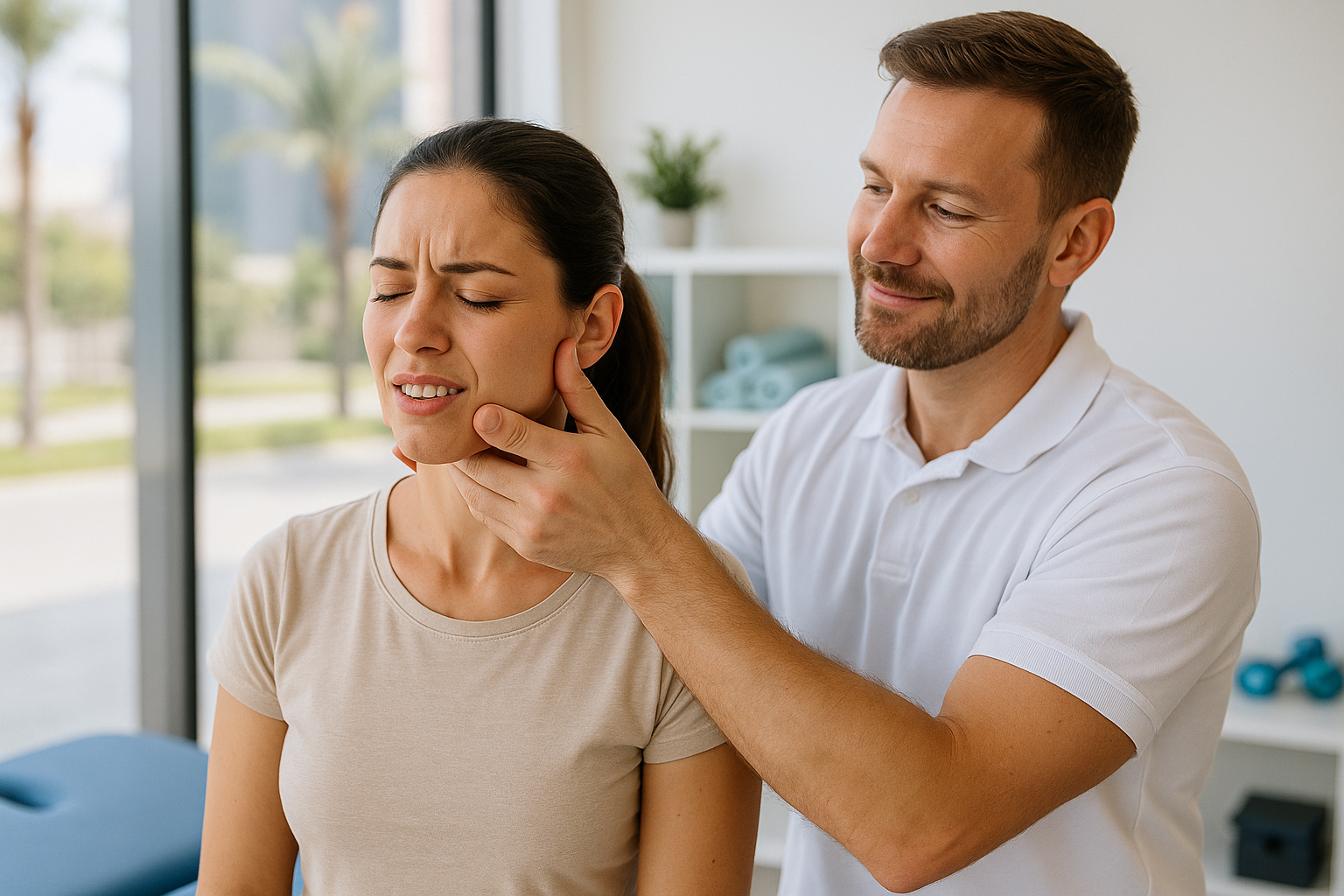
That audible 'click' or 'pop' every time you yawn, chew, or even speak can be more than just an annoyance—it can be a persistent source of discomfort and worry. If you're tired of living with the uncertainty and pain of a clicking jaw, you're not alone. This condition, often related to Temporomandibular Joint (TMJ) dysfunction, can significantly impact your quality of life. The good news is that lasting relief is achievable. A structured, professional approach is key, and targeted physiotherapy for jaw clicking and popping offers a powerful, evidence-based solution. At Physio Cure Dubai, our doctor-led team focuses on diagnosing the root cause of your jaw issues to provide a personalized path back to quiet, pain-free movement through advanced hands-on techniques.
Decoding the 'Click': What's Really Happening in Your Jaw?
The sound you hear is a signal from your Temporomandibular Joint (TMJ), the complex hinge connecting your jawbone to your skull. This joint, along with its surrounding muscles, ligaments, and a small shock-absorbing disc, allows for the smooth movements of chewing and talking. Jaw clicking and popping often occur when this intricate system falls out of sync.
Common causes include:
- Articular Disc Displacement: The most frequent culprit. The cartilage disc inside your jaw joint can slip out of its normal position. The 'click' is the sound of it snapping back into place as you open your mouth, and another 'pop' might occur as it slips off again upon closing.
- Muscle Imbalance and Tension: The muscles that control your jaw (like the masseter and temporalis) can become overworked and tight due to stress, teeth grinding (bruxism), or clenching. This muscular tension can pull the jaw out of its optimal alignment, leading to dysfunctional movement and noise.
- Postural Issues: Poor posture, especially a forward-head position, places significant strain on the muscles of your neck and jaw. This chronic tension can directly contribute to TMJ dysfunction. It's a key reason our approach often includes assessing and treating related areas, similar to our comprehensive back pain treatment protocols.
- Arthritis or Joint Damage: In some cases, degenerative changes within the joint itself can cause roughness and noise during movement.
Simply masking the sound isn't enough. At Physio Cure Dubai, our core philosophy is rooted in a meticulous 'Root-Cause Diagnosis.' We don't just hear the click; we investigate why it's happening. This allows us to move beyond temporary fixes and create a treatment plan for lasting relief. As highlighted in authoritative TMJ resources, understanding the specific mechanics of your jaw is the first step toward effective intervention.
A clicking jaw is not just a sound; it's a symptom. Effective treatment begins with understanding the underlying biomechanical issue, not just silencing the noise.
The Power of a Doctor-Led Physiotherapy for Jaw Clicking and Popping Guide
When seeking help for jaw pain, it's crucial to choose a provider who offers more than just generic exercises. This is where a doctor-led approach makes a profound difference. At Physio Cure Dubai, every assessment, diagnosis, and treatment is performed by a licensed Doctor of Physical Therapy—not a technician. This ensures a level of clinical expertise necessary to manage the complexities of TMJ disorders.
A specialized physiotherapy for jaw clicking and popping physiotherapy plan aims to:
- Restore Normal Joint Mechanics: The primary goal is to retrain the jaw to move smoothly and correctly, ensuring the articular disc tracks properly throughout the entire range of motion.
- Release Muscle Tension: Targeted manual therapy techniques release trigger points and reduce hypertonicity in the overworked jaw and neck muscles. This alleviates pain and restores balance.
- Strengthen and Stabilize: Specific exercises strengthen weak supporting muscles to provide better long-term stability for the joint.
- Improve Posture: By addressing underlying postural dysfunctions in the neck and upper back, we reduce the chronic strain on the TMJ. Our experts, like Dr. Shaimaa Hamdalla, are renowned for their holistic methods in managing chronic pain and postural dysfunctions.
- Educate for Self-Management: We empower you with the knowledge to manage your condition, from correct resting jaw posture to stress-reduction techniques that minimize clenching.
This comprehensive, personalized care model is what sets a clinical, doctor-led program apart. It’s a holistic and evidence-based approach that combines skilled hands-on therapy with advanced modalities to address every contributing factor to your jaw discomfort.
Your Recovery Journey: What to Expect from Jaw Physiotherapy Sessions
Your path to a quieter, more comfortable jaw follows a structured and patient-centered journey. At Physio Cure Dubai, we believe in transparency and collaboration, ensuring you are an active partner in your recovery.
Step 1: Comprehensive Assessment and Diagnosis
Your journey begins not with treatment, but with understanding. We start with a detailed assessment to identify the root cause. This involves evaluating your jaw's range of motion, listening for clicks at different stages of opening and closing, palpating the muscles of the jaw, head, and neck for tension and trigger points, and analyzing your posture. This initial deep dive is crucial for creating a 100% personalized treatment plan.
Step 2: Hands-On Manual Therapy
Manual therapy is the cornerstone of effective TMJ treatment. Our highly skilled doctors, including our Medical Director Dr. Mina Gamil, use precise, hands-on techniques to directly treat the joint and surrounding tissues. This may include:
- Intra-oral Myofascial Release: A technique where the therapist works inside the mouth (with gloves) to release deep, hard-to-reach jaw muscles.
- Joint Mobilization: Gentle, skilled movements applied directly to the TMJ to improve its mobility and encourage the disc to track correctly.
- Soft Tissue Massage: Focused massage on external jaw muscles (masseter, temporalis) and neck muscles to release tension and improve blood flow.
- Dry Needling or Acupuncture: Advanced modalities used to release stubborn trigger points and reduce pain signals.
Step 3: Guided Therapeutic Exercise and Education
Alongside hands-on treatment, you will be guided through a specific set of exercises designed to retrain your jaw's movement patterns, improve coordination, and enhance stability. We also focus heavily on patient education, teaching you how to avoid habits that aggravate your TMJ and how to maintain proper jaw and head posture throughout your day.
Empower Your Recovery: At-Home Physiotherapy for Jaw Clicking and Popping Exercises
Consistency is key. While in-clinic therapy is vital, the exercises you perform at home are what solidify your progress. Your physiotherapist will prescribe a specific routine for you. The following are common foundational exercises, but always consult with your clinician before starting a new program.
Perform these gently and stop if they cause sharp pain:
- The Neutral Resting Position: The most important "exercise" is how you hold your jaw at rest. Place the tip of your tongue gently on the roof of your mouth, just behind your front teeth. Let your teeth come slightly apart and keep your lips closed. Practice this posture throughout the day to relax your jaw muscles.
- Controlled Opening (Goldfish Exercise): Place your tongue on the roof of your mouth. Put one finger on your TMJ (in front of your ear) and another on your chin. Drop your lower jaw halfway and then close it, keeping your tongue up. This encourages movement from the joint as a pure hinge. Perform 6 repetitions in one set, several times a day.
- Chin Tucks: Sit or stand tall, looking straight ahead. Without tilting your head down, gently draw your head and chin straight back, creating a "double chin." You should feel a stretch at the back of your neck. Hold for 5 seconds and repeat 10 times. This corrects forward head posture, a major contributor to jaw strain.
- Resisted Opening: Place your thumb under your chin. Open your mouth slowly while applying gentle upward pressure with your thumb. This helps strengthen the muscles that open the jaw. Hold for 3-5 seconds, then relax. Repeat 5-10 times.
- Side-to-Side Jaw Movement: Place a thin object, like a couple of stacked tongue depressors, between your front teeth. Slowly and gently glide your jaw from side to side. As your mobility improves, you can gradually increase the thickness of the object.
Your commitment to your home exercise program is what transforms in-clinic treatments into long-lasting results. Small, consistent efforts each day retrain your muscles and reinforce healthy movement patterns.
Holistic Physiotherapy for Jaw Clicking and Popping Tips for Lasting Health
True recovery extends beyond the clinic and your exercise routine. Adopting healthier habits is a critical component of our holistic approach. Here are some essential tips to protect your jaw health for the long term:
- Be Mindful of Your Diet: Avoid hard, chewy, or crunchy foods (like tough breads, steak, raw carrots, or chewing gum) when your jaw is flared up. Opt for softer foods and cut things into smaller pieces to reduce the strain on your TMJ.
- Stop Chewing Habits: Unconscious habits like chewing on pens, biting your nails, or cradling a phone between your ear and shoulder can put immense stress on your jaw joint. Make a conscious effort to identify and eliminate these triggers.
- Manage Stress: Stress is a primary driver of jaw clenching and teeth grinding. Incorporate stress-management techniques into your daily routine, such as deep breathing exercises, meditation, yoga, or simply taking short breaks to consciously relax your jaw and shoulders.
- Avoid Big Yawns: When you feel a yawn coming on, try to control it. Place your fist under your chin to provide support and prevent your jaw from opening too wide, which can cause the disc to slip.
- Optimize Your Sleep Position: Sleeping on your stomach can put your neck and jaw in a strained, twisted position. Try to sleep on your back or, if you're a side sleeper, use a supportive pillow that keeps your head and neck in neutral alignment.
Living with a clicking, popping jaw is not something you have to accept. Through a dedicated, doctor-led physiotherapy program that combines expert manual therapy with targeted exercises and holistic lifestyle changes, you can address the root cause of the problem, restore proper function, and finally enjoy the peace of quiet, pain-free movement.
Ready to silence the click and find lasting relief? Contact Physio Cure Dubai today to schedule your comprehensive assessment and start your personalized journey to a healthier jaw.
Frequently Asked Questions
Need Help With Your Recovery?
Book a free consultation with our expert physiotherapists.
Related Articles

Transform Posture to Eliminate TMJ Jaw Pain for Good
Unlock lasting TMJ relief by fixing forward head posture. Learn doctor-led corrective exercises, manual therapy, and ergonomic tweaks that end jaw pain for good.
15 min read

Jaw Alignment & Headache Relief: Doctor-Led Physiotherapy
Discover how TMJ dysfunction and jaw misalignment trigger chronic headaches. Learn evidence-based physiotherapy for lasting pain relief and better posture.
13 min read

Massage Techniques for TMJ Pain: Ultimate Relief Guide
TMJ massage offers jaw pain relief. Ease tension, boost mobility, and curb headaches. Follow step-by-step self-care and learn when physiotherapy can help.
14 min read