

Improve Balance with Gaze Stabilization for Dizziness Relief
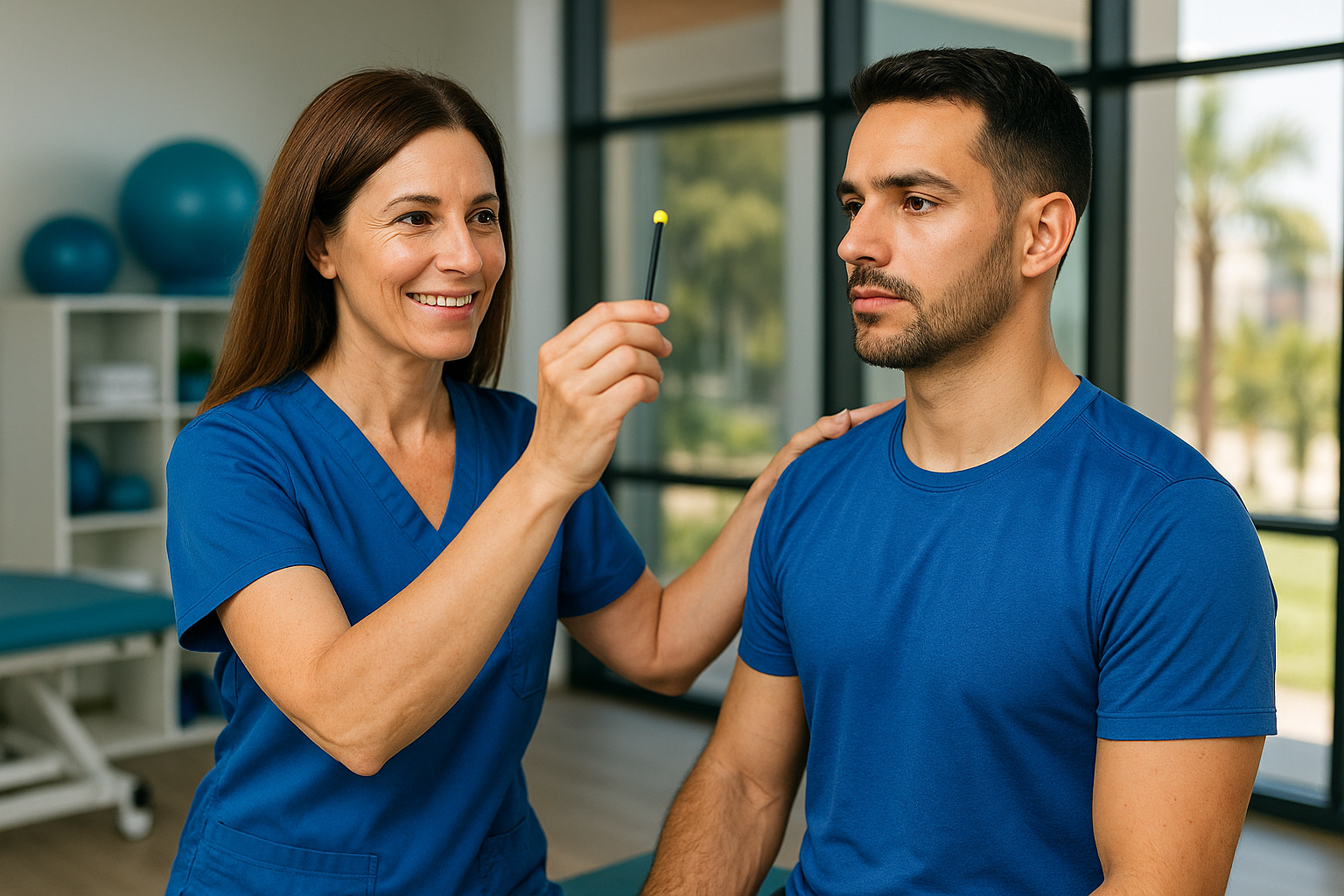
Living with dizziness, vertigo, or a persistent sense of imbalance can feel like navigating a world that's constantly shifting beneath your feet. It’s disorienting, exhausting, and can shrink your world, making simple activities feel like monumental challenges. But what if you could retrain your brain to find stillness amidst the motion? This is the promise of a powerful, evidence-based approach to reclaiming your stability. For those struggling with conditions like vestibular migraines or chronic dizziness, specialized programs incorporating these powerful gaze stabilization exercises for balance can be truly life-changing, offering a clear and hopeful path back to confidence and control.
Understanding the Symphony of Balance: Why You Feel Unsteady
To understand how to fix a problem, we must first understand its source. Your sense of balance isn't governed by a single part of the body; it's a complex and beautiful symphony conducted by your brain, with three key musicians: your eyes (visual system), your inner ears (vestibular system), and your body's sense of its position in space (proprioception). When these three systems send perfectly synchronized signals to the brain, you feel stable and grounded. Dizziness, vertigo, and imbalance occur when there's a conflict in the information they send. This sensory mismatch can be triggered by various conditions, such as Benign Paroxysmal Positional Vertigo (BPPV), labyrinthitis, vestibular neuritis, or even post-concussion syndrome.
Your vestibular system, located in your inner ear, acts like a sophisticated gyroscope. It detects head motion—up, down, side-to-side, and tilting—and tells your brain how you're oriented relative to gravity. When this system is compromised, it might send faulty signals, creating a sensation of spinning or moving when you are perfectly still. This is where targeted physiotherapy comes in, not just to manage the symptoms, but to address the root cause of this sensory confusion. The goal of `dizziness treatment physiotherapy` is to help the brain recalibrate and learn to trust the signals from your inner ear again, a process known as vestibular compensation.
What Are Gaze Stabilization Exercises? Retraining Your Brain's "Auto-Focus"
At the heart of `vestibular rehab exercises` are gaze stabilization exercises. Think of them as a targeted workout for a crucial neural connection called the Vestibulo-Ocular Reflex (VOR). The VOR is a remarkable reflex that automatically moves your eyes in the opposite direction of your head movement to keep what you're looking at stable and clear. It’s what allows you to read a sign while walking or maintain eye contact with someone while nodding your head. When your vestibular system is impaired, the VOR can weaken. The result? The world may appear to bounce, jump, or blur with head movement—a phenomenon known as oscillopsia. This visual instability is a major contributor to feelings of dizziness and imbalance.
The goal isn't to stop moving your head; it's to teach your brain to keep your vision steady *while* you move your head, re-establishing confidence and control.
Gaze stabilization exercises work by repeatedly challenging the VOR. By consciously focusing on a fixed target while methodically moving your head, you are essentially recalibrating this reflex. Over time and with consistent practice, your brain adapts. It learns to correctly interpret the signals from your healing vestibular system and coordinate them with your visual system, strengthening the VOR and reducing your symptoms. This is not a passive treatment; it is an active retraining process that empowers you to take control of your recovery.
Your Guide to Foundational Gaze Stabilization Exercises for Balance Exercises
Before you begin, it’s crucial to create a safe environment. Start these exercises seated in a sturdy chair, especially if your symptoms are severe. As you improve, you can progress to standing near a wall or countertop for support. Consistency is far more important than intensity. Performing these for a few minutes several times a day is more effective than one long, exhausting session.
-
The "X1 Viewing" Exercise (The Starting Point): This is the cornerstone of gaze stabilization.
- Hold a small, simple target (like a business card with a single letter on it, or just your thumb) at arm's length, directly at eye level.
- Keep your eyes locked onto the target, ensuring it remains sharp and in focus.
- Slowly and gently turn your head from side to side, as if you were shaking your head "no." Only move as far and as fast as you can while keeping the target perfectly clear. If it blurs or doubles, you're moving too quickly.
- Perform this for 30-60 seconds. Rest.
- Repeat the exercise, this time nodding your head up and down ("yes"), again keeping the target crystal clear.
- Aim to do this 3-5 times per day.
-
Walking with Head Turns: This exercise integrates gaze stability with dynamic movement, a key part of `balance training for vertigo`.
- Find a clear, uncluttered hallway or space where you can walk for about 20-30 feet.
- Begin walking at a slow, comfortable pace.
- As you walk, slowly turn your head to the left, then to the right, keeping your eyes looking forward in the direction you are walking.
- Focus on maintaining your balance and walking in a straight line. Use a wall for light support if needed initially.
- Start with just a few turns and gradually increase as you feel more confident. This helps your brain manage simultaneous inputs from your vestibular, visual, and proprioceptive systems.
-
Near and Far Focus Shifts: This exercise improves the flexibility of your visual focusing system.
- Sit or stand in a room with a target at least 10 feet away (like a light switch or a picture on the wall).
- Hold your thumb up about 12 inches from your face.
- Focus on your thumb for a few seconds until it is clear.
- Shift your focus to the distant object until it becomes clear.
- Alternate back and forth between your thumb and the distant object for about one minute.
Progressing Safely and Listening to Your Body
The journey of vestibular rehabilitation is one of gradual progress. It is normal and even expected to feel a slight increase in your dizziness when you first begin these exercises. This is a sign that you are challenging the system in the right way. However, the symptoms should settle down within a few minutes of stopping the exercise. If they linger for a long time or are severe, you are likely pushing too hard. The key is to find the sweet spot between gentle challenge and over-stimulation.
Listen to your body. A slight feeling of dizziness is part of the retraining process, but severe symptoms mean you should slow down or consult your physiotherapist. Progress, not perfection, is the key.
As you get more comfortable, you can progress the exercises by:
- Increasing Speed: Gradually increase the speed of your head movements while ensuring the target remains clear.
- Increasing Duration: Work your way up from 30 seconds to 1-2 minutes per exercise.
- Reducing Support: Move from sitting to standing, and then from standing with support to standing without. You can eventually try standing with your feet closer together or in a tandem (heel-to-toe) stance.
- Changing the Surface: Progress to standing on a pillow or foam pad to further challenge your balance systems.
- Adding a Complex Background: Perform the exercises in front of a patterned or "busy" background (like a checkerboard or a busy wallpaper) to teach your brain to filter out distracting visual information.
Beyond the Exercises: The Power of a Doctor-Led, Holistic Approach
While these exercises are fundamental, they are most effective when they are part of a comprehensive, personalized treatment plan. At Physio Cure Dubai, our core philosophy is built on this principle. We are Dubai's Premier Doctor-Led Physiotherapy Clinic, meaning your entire journey—from assessment to treatment—is handled by licensed doctors of physical therapy, not technicians. This begins with a deep dive into finding the 'Root-Cause Diagnosis' of your dizziness. Is it a mechanical issue in the inner ear? A neurological sensitivity? Or a combination of factors? Only by understanding the true source can we build a plan that delivers lasting relief.
Your treatment plan will be 100% personalized. A senior physiotherapist, like Dr. Talaat Abdelhakeem or Dr. Shaimaa Hamdalla, will consider your specific diagnosis, your lifestyle, and your personal goals. The plan will integrate advanced hands-on manual therapy with guided exercises and patient education. The effectiveness of this combined approach is strongly supported by clinical evidence. As noted in research from the National Center for Biotechnology Information, structured gaze stability training has been shown to significantly improve balance and postural control in individuals with vestibular deficits. Our commitment is to use these evidence-based practices to create a holistic recovery path that empowers you not just to manage your symptoms, but to return to the activities you love with confidence.
Feeling unsteady should not be your new normal. If you're ready to reclaim your balance and live a life free from dizziness, our doctor-led team at Physio Cure Dubai is here to guide you. Take the first step towards a steadier future by learning more about our specialized Vestibular Migraine and Dizziness Rehabilitation programs and booking your assessment today.
Frequently Asked Questions
Need Help With Your Recovery?
Book a free consultation with our expert physiotherapists.
Related Articles

Dizziness & Balance Issues: Causes and Relief Guide
Discover how inner ear, neurological, and cardiovascular factors trigger dizziness. Learn physiotherapy vestibular rehab strategies to regain balance today.
14 min read
VR Therapy Revolutionizes Vestibular Rehab & Balance
Explore how VR-driven vestibular rehab transforms dizziness recovery. Immersive balance training boosts adherence, speeds symptom relief, and restores confidence.
12 min read
VR Vestibular Rehab: Fast Relief for Vertigo & Dizziness
Conquer vertigo, dizziness and balance issues with cutting-edge VR vestibular rehabilitation led by doctors of physiotherapy in Dubai. Book your session today.
13 min read